Las empresas ya no incorporan criptopagos como un experimento.
En 2026, los incorporan porque los clientes esperan más opciones de pago, la liquidación global es importante y las stablecoins se han convertido en parte de las operaciones comerciales diarias.
Para muchas empresas, la pregunta ya no es "¿Debemos aceptar cripto?" a "¿Cómo integramos criptopagos sin reconstruir nuestra infraestructura de pagos?"
Esta guía explica cómo funciona la infraestructura moderna de pagos con criptomonedas, qué deben buscar las empresas al elegir un proveedor y cómo empezar a aceptar criptopagos con CPAY.
Por qué más empresas aceptan criptopagos en 2026
El comercio transfronterizo sigue creciendo, mientras que los sistemas de pago tradicionales siguen introduciendo costes y retrasos innecesarios.
Las empresas que venden internacionalmente suelen enfrentarse a:
- comisiones por procesamiento de tarjetas que reducen los márgenes;
- transferencias bancarias internacionales que tardan varios días hábiles;
- costes de conversión de divisa;
- restricciones de pago en ciertas regiones;
- contracargos y disputas de pago.
Las stablecoins resuelven muchos de estos desafíos operativos.
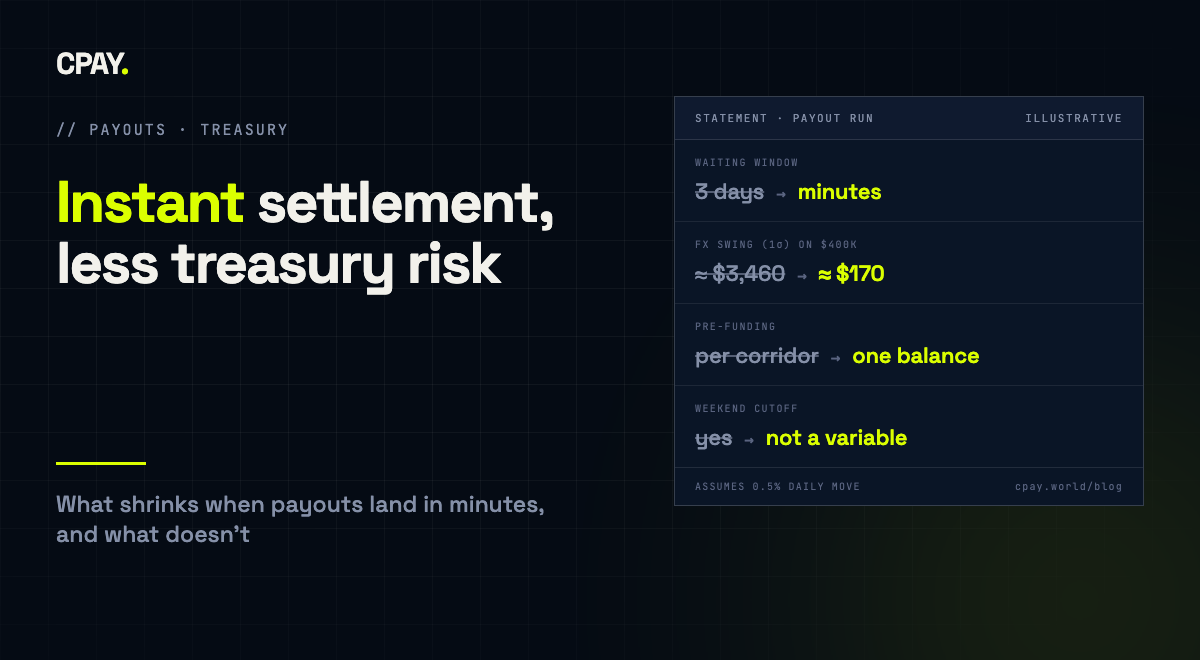
USDT y USDC permiten a las empresas recibir pagos en cuestión de minutos, liquidar a nivel global y reducir los costes de procesamiento de pagos en comparación con las redes de tarjetas tradicionales.
Para las empresas que operan en varios países, las stablecoins se están convirtiendo en otra capa de liquidación junto a la banca tradicional.
Lo que las empresas esperan de los criptopagos hoy
Aceptar criptomonedas es solo una parte de la experiencia de pago.
Las empresas modernas también esperan una infraestructura que se adapte a los flujos de trabajo existentes.
Esto suele incluir:
- páginas de pago alojadas;
- API de pago;
- enlaces de pago y facturas;
- notificaciones de webhook;
- soporte para suscripciones;
- confirmación de pago automatizada;
- historial de transacciones listo para contabilidad;
- soporte para múltiples redes blockchain.
Una solución de pago con criptomonedas debe funcionar junto con los sistemas financieros existentes en lugar de introducir nuevos procesos manuales.
Cómo funciona CPAY
CPAY proporciona una infraestructura de pago con criptomonedas no custodial diseñada para empresas.
En lugar de mover fondos a través de una plataforma custodial, los pagos se liquidan directamente en monederos controlados por el comerciante.
La plataforma combina varios componentes en una única pila de pagos:
- pago con criptomonedas;
- API de pago;
- enlaces de pago;
- facturas;
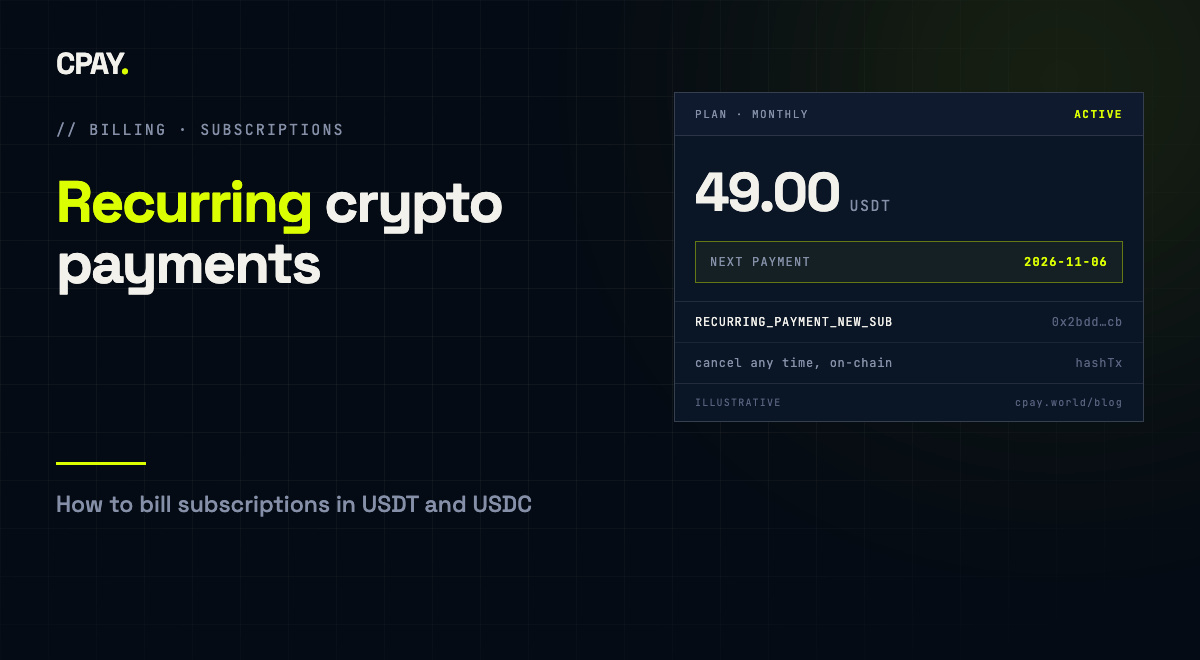
- suscripciones;
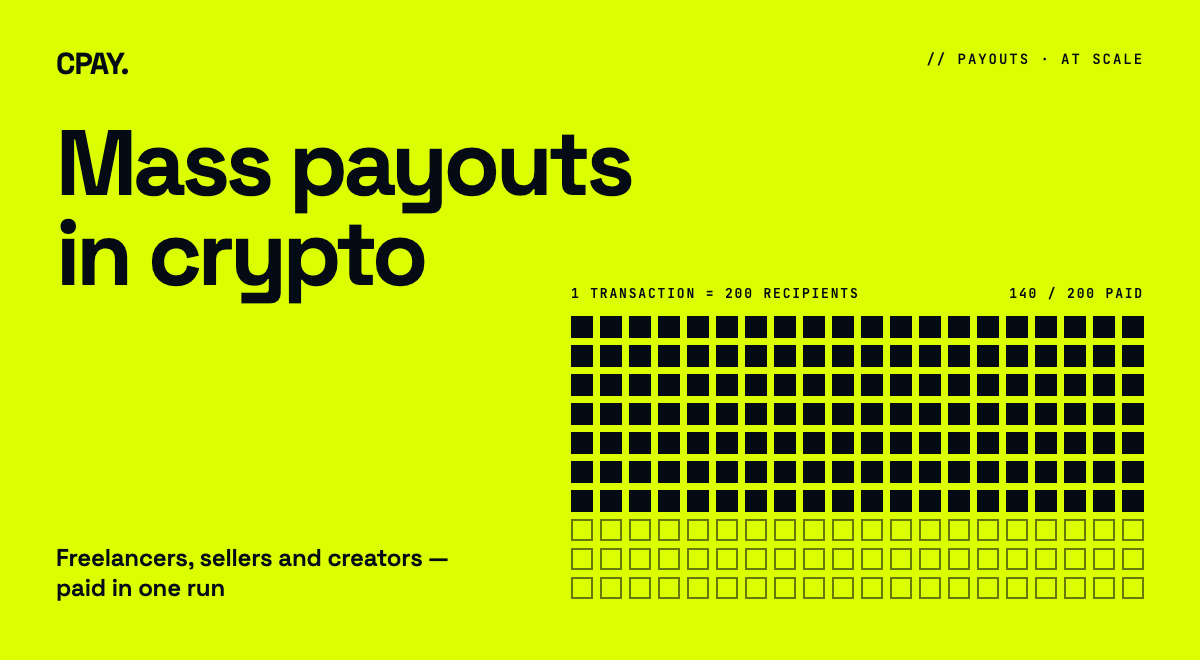
- pagos masivos;
- notificaciones de webhook;
- servicios de KYC y AML;
- infraestructura de billetera para empresas que desarrollan productos cripto.
Las empresas pueden empezar con un proceso de pago alojado o integrarse directamente a través de la API, según sus requisitos.
Opción 1: Aceptar pagos con criptomonedas a través de Checkout
El Checkout alojado es la opción de integración más rápida.
En lugar de crear páginas de pago desde cero, los comerciantes generan una sesión de pago y redirigen a los clientes a una página de pago segura.
Un flujo típico es el siguiente:
- El cliente selecciona Cripto en el proceso de pago.
- CPAY genera una sesión de pago.
- El cliente paga utilizando una billetera compatible.
- La confirmación en la blockchain se detecta automáticamente.
- Un webhook actualiza el estado del pedido del comerciante.
- Los fondos se liquidan directamente en la billetera del comerciante.
Este enfoque funciona bien para:
- Tiendas de comercio electrónico
- Plataformas SaaS
- Productos digitales
- Servicios en línea
- Suscripciones
No se requiere experiencia en blockchain para el lanzamiento.
Opción 2: Integrar directamente con la API de Pagos
Las empresas que necesitan un control total suelen integrarse a través de la API de Pagos de CPAY.
Los desarrolladores pueden:
- crear solicitudes de pago;
- generar enlaces de pago;
- monitorear el estado de los pagos;
- recibir eventos de webhook;
- automatizar la conciliación;
- gestionar suscripciones;
- procesar pagos por lotes.
La API está diseñada para adaptarse a las arquitecturas de pago existentes sin reemplazar los sistemas empresariales internos.
Esto la hace adecuada para empresas que ya operan flujos de pago personalizados o plataformas de pago propietarias.
Los pagos con stablecoins simplifican las operaciones globales
La mayoría de los pagos cripto empresariales hoy en día se realizan en stablecoins.
En lugar de lidiar con la volatilidad de los precios, las empresas pueden recibir fondos en activos que siguen de cerca el dólar estadounidense.
Entre los casos de uso empresarial más comunes se encuentran:
- pagos de clientes;
- pagos a proveedores;
- pagos a contratistas;
- liquidaciones internacionales;
- facturación de suscripciones;
- pagos de marketplaces.
Las stablecoins ayudan a las empresas a estandarizar las liquidaciones en diferentes países sin depender de la infraestructura bancaria local.
Activos y redes compatibles
CPAY es compatible con más de 100 activos digitales en ocho redes blockchain.
Las empresas pueden aceptar criptomonedas populares junto con las principales stablecoins, manteniendo una única infraestructura de pago.
Los clientes eligen el activo que prefieren.
Los comerciantes reciben la confirmación del pago a través de la misma API, independientemente de la blockchain utilizada.
Esto elimina la complejidad de soportar múltiples redes de forma independiente.
Industrias que utilizan pagos cripto

Los pagos cripto se están integrando en varias industrias de alto volumen.
eCommerce
Las tiendas en línea pueden ampliar las opciones de pago para clientes internacionales a la vez que reducen los costos de procesamiento.
Brókeres de Forex
Los traders esperan depósitos y retiros rápidos.
Las stablecoins ayudan a reducir los tiempos de liquidación a la vez que dan soporte a clientes globales.
iGaming
Los depósitos y retiros instantáneos mejoran la experiencia del jugador y simplifican los pagos internacionales.
Firmas de prop trading
Las tarifas de evaluación, los pagos a traders y las liquidaciones internacionales pueden procesarse a través de la infraestructura de pagos con criptomonedas.
Comerciantes de alto riesgo
Las empresas que operan en sectores donde el procesamiento de pagos tradicional es costoso a menudo utilizan criptomonedas para mejorar la aceptación de pagos y reducir los costos operativos.
Seguridad y cumplimiento
La infraestructura de pagos debería incluir más que solo el procesamiento de pagos.
CPAY también ofrece:
- liquidación no custodial;
- verificación KYC;
- monitoreo de transacciones AML;
- autenticación de webhook;
- seguimiento del estado de los pagos;
- registros de transacciones auditables.
Estas funcionalidades ayudan a las empresas a integrar criptopagos mientras mantienen la visibilidad operativa.
¿Por qué los desarrolladores eligen una infraestructura API-first?
Muchas empresas ya cuentan con sistemas de pago, software ERP, herramientas de contabilidad y flujos de trabajo de pago internos.
Reemplazar todo rara vez tiene sentido.
Una infraestructura de pago API-first permite a las empresas extender los sistemas existentes en su lugar.
Los desarrolladores pueden conectar criptopagos a:
- plataformas de comercio electrónico;
- sistemas CRM;
- software ERP;
- plataformas de suscripción;
- herramientas financieras internas;
- flujos de pago de marketplaces.
La capa de pago se convierte en otro servicio dentro de la arquitectura existente.
Primeros pasos con CPAY
Las empresas suelen comenzar en tres pasos.
1. Elija un método de integración
Seleccione Hosted Checkout para una implementación rápida o Payment API para una personalización completa.
2. Conecta tu billetera
Los pagos se liquidan directamente en tu billetera a través de la infraestructura no custodial de CPAY.
3. Poner en marcha
Empieza a aceptar pagos en más de 100 activos a través de ocho redes blockchain compatibles, procesando transacciones mediante una única integración.
Preguntas frecuentes
¿Cuánto tiempo lleva la integración?
El Checkout alojado se puede implementar rápidamente, mientras que las integraciones de API dependen de la complejidad del sistema de pago existente.
¿CPAY es compatible con las stablecoins?
Sí. Las empresas pueden aceptar las principales stablecoins, incluyendo USDT y USDC.
¿CPAY retiene los fondos?
No. CPAY proporciona una infraestructura no custodial, lo que permite a las empresas controlar sus propias billeteras.
¿Pueden los desarrolladores integrarse a través de APIs?
Sí. CPAY ofrece APIs, webhooks, enlaces de pago, suscripciones, facturas y capacidades de pago por lotes.
¿Qué empresas utilizan CPAY?
La plataforma está diseñada para eCommerce, empresas SaaS, brókeres de forex, operadores de iGaming, firmas de prop trading, marketplaces y empresas que procesan pagos internacionales.
Consideraciones finales
Los pagos con criptomonedas han evolucionado de ser una opción de pago adicional a convertirse en una infraestructura de pago.
Los clientes esperan experiencias de pago familiares.
Los equipos financieros esperan una liquidación predecible.
Los desarrolladores esperan APIs que se integren con los sistemas existentes.
Las empresas que adopten pagos con criptomonedas en 2026 están invirtiendo en infraestructura que respalde el crecimiento a largo plazo, la automatización y el comercio global.
CPAY reúne el proceso de pago, APIs, pagos con stablecoins, infraestructura de monederos y servicios de cumplimiento normativo en una sola plataforma, ofreciendo a las empresas una base flexible para aceptar pagos con criptomonedas a gran escala.