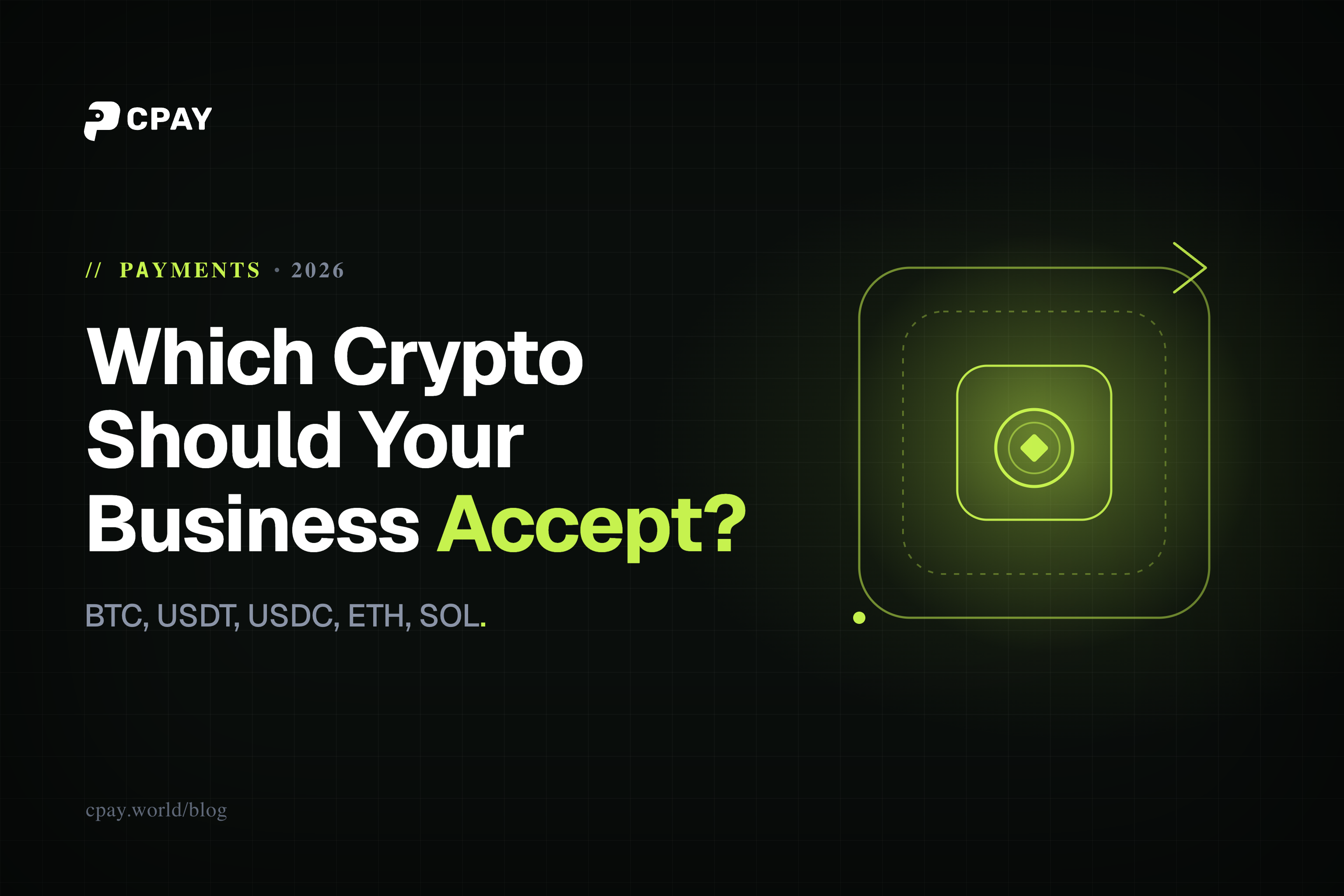
Aceptar cripto ya no es una decisión binaria. La verdadera pregunta es qué activos tienen sentido para tus clientes, tus operaciones y tu tesorería.
Algunas empresas muestran con orgullo los logotipos de 100 criptomonedas, pero descubren que casi todos los pagos llegan en solo un puñado de ellas. Otras solo admiten Bitcoin y pierden clientes que prefieren las stablecoins para sus gastos diarios.
La estrategia correcta depende de cómo recibe los pagos tu negocio, dónde se encuentran tus clientes y qué sucede después de que un pago llega a tu monedero.
Esta guía explica qué criptomonedas deberían aceptar las empresas en 2026, dónde encaja cada activo y cómo construir una pila de pagos escalable.
Los pagos cripto se han especializado más
Hace unos años, añadir pagos con criptomonedas significaba principalmente aceptar Bitcoin.
Hoy, el mercado es muy diferente.
Las empresas reciben pagos de traders, equipos remotos, compradores online, plataformas de juegos, aplicaciones de IA y socios internacionales. Esos usuarios no pagan todos con los mismos activos.
En lugar de buscar una única "mejor criptomoneda", las empresas separan cada vez más los activos en diferentes roles:
- reserva de valor
- pagos operativos
- comodidad para el cliente
- transacciones específicas del ecosistema
Comprender esos roles ayuda a reducir la complejidad operativa al tiempo que ofrece a los clientes la flexibilidad que esperan.
Bitcoin (BTC): ideal para transacciones grandes y tenedores a largo plazo
Bitcoin sigue siendo la criptomoneda más reconocida del mundo.
Muchos clientes mantienen BTC como una inversión a largo plazo y prefieren pagar directamente sin convertir a moneda fiduciaria.
Para las empresas, Bitcoin funciona especialmente bien para:
- productos de lujo
- compras de alto valor
- facturas B2B
- transacciones internacionales
- empresas que atienden a clientes criptonativos
Bitcoin también conlleva algunas consideraciones operativas.
Las tarifas de red pueden fluctuar según la actividad de la blockchain, y los tiempos de confirmación suelen ser más largos que en las redes de pago más nuevas.
Para las empresas que procesan cientos o miles de pagos diarios, Bitcoin suele representar solo una parte de la combinación general de pagos, en lugar de ser el activo predeterminado.
Stablecoins: el estándar operativo para pagos empresariales
Las stablecoins se han convertido en el activo de pago preferido para muchas empresas.
USDT y USDC combinan la liquidación en blockchain con la estabilidad de precios, lo que los hace adecuados para las operaciones comerciales diarias.
Las empresas suelen utilizar stablecoins para:
- pagos de clientes
- liquidaciones a proveedores
- pagos a contratistas
- comisiones de afiliados
- transferencias de tesorería
- facturación de suscripciones
A diferencia de las criptomonedas volátiles, las stablecoins simplifican la contabilidad porque su valor permanece vinculado a las monedas fiduciarias.
También reducen la exposición de tesorería cuando las empresas reciben pagos a lo largo del día.
Para las empresas que mueven fondos regularmente a través de fronteras, las stablecoins a menudo se convierten en la principal moneda de liquidación.
USDT vs USDC
Muchas empresas se preguntan si deberían admitir USDT o USDC.
La respuesta es sencilla:
Admite ambos siempre que sea posible.
Cada uno atiende a un público ligeramente diferente.
USDT
USDT sigue siendo la stablecoin más utilizada en exchanges, plataformas de trading, brókeres de forex y muchos mercados emergentes.
Las empresas que operan a nivel global a menudo reciben la mayoría de sus pagos en stablecoins en USDT.
USDC
USDC sigue creciendo entre plataformas financieras reguladas, empresas fintech, proveedores de SaaS y negocios que priorizan la transparencia y la adopción institucional.
Muchas empresas norteamericanas y europeas prefieren liquidar en USDC.
Admitir ambos ofrece flexibilidad a los clientes sin añadir una complejidad operativa significativa.
Ethereum (ETH)
Ethereum sigue siendo una de las criptomonedas más grandes por capitalización de mercado.
Muchos usuarios criptonativos poseen ETH, lo que la convierte en una opción de pago lógica para empresas que atienden a desarrolladores de blockchain, plataformas NFT y usuarios de DeFi.
Sin embargo, ETH es generalmente menos común para pagos comerciales rutinarios que las stablecoins, porque:
- el precio del activo cambia continuamente
- las tarifas de red varían según la demanda
- muchos usuarios prefieren mantener ETH invertido
Para las empresas, ETH funciona bien como una opción de pago adicional en lugar de la moneda de liquidación principal.
Solana (SOL)
Solana se ha vuelto cada vez más popular gracias a su velocidad y bajos costos de transacción.
Las empresas que prestan servicios a plataformas de juegos, servicios digitales, creadores y aplicaciones de consumo a menudo ven un volumen de pagos creciente en SOL.
Su rápida liquidación la hace adecuada para:
- microtransacciones
- bienes digitales
- servicios en línea
- pagos de alta frecuencia
A medida que se expande la adopción, el soporte de SOL puede mejorar la experiencia de pago para los clientes que ya están activos en su ecosistema.
¿Deberías aceptar memecoins?
Muchas empresas preguntan sobre la aceptación de activos como DOGE, PEPE, BONK u otros tokens impulsados por la comunidad.
La respuesta depende completamente de tu audiencia.
Si tus clientes utilizan activamente esos activos, ofrecerlos como opciones de pago puede aumentar la conversión.
Para la mayoría de las empresas B2B, sin embargo, las memecoins representan solo un pequeño porcentaje del volumen de transacciones.
Operativamente, añaden complejidad al tiempo que ofrecen un valor comercial limitado.
Más activos compatibles no siempre significan mejores pagos
Muchos proveedores de pagos anuncian compatibilidad con cientos de criptomonedas.
Suena impresionante.
El comportamiento del cliente cuenta una historia diferente.

Los activos adicionales pueden mejorar la flexibilidad del cliente, pero rara vez reemplazan las principales monedas de pago que las empresas procesan a diario.
El objetivo no es crear la lista de activos más grande.
El objetivo es dar soporte a los activos que tus clientes realmente utilizan.
Piensa más allá del propio activo
Elegir criptomonedas es solo una parte de una estrategia de pagos.
Las empresas también necesitan infraestructura para cada transacción.
Las preguntas se vuelven rápidamente operativas:
- ¿En qué blockchain deberían pagar los clientes?
- ¿Cómo se rastrean las confirmaciones de pago?
- ¿Cómo se concilian las transacciones entrantes?
- ¿Quién recibe la liquidación?
- ¿Cómo se gestionan los pagos?
- ¿Cómo se realizan las verificaciones AML?
- ¿Cómo exporta finanzas el historial de transacciones?
A medida que el volumen de pagos crece, los flujos de trabajo operativos se vuelven más importantes que la propia lista de activos.
¿Qué deberían aceptar la mayoría de las empresas en 2026?
Para la mayoría de las empresas, una pila de pagos práctica incluye:
PrioridadActivoIdeal paraEsencialUSDTPagos globales, desembolsos, tesoreríaEsencialUSDCNegocios regulados, SaaS, fintechEsencialBTCPagos de alto valor, clientes cripto-nativosRecomendadoETHEcosistemas Web3, audiencias de desarrolladoresRecomendadoSOLPagos rápidos para consumidores y servicios digitales
Las empresas que atienden a comunidades blockchain específicas pueden expandirse más allá de estos activos, pero esta base cubre la mayor parte de la demanda de pagos cripto comerciales.
Diseña tu pila de pagos en torno al comportamiento del cliente
La estrategia de pagos cripto más sólida comienza por entender cómo prefieren pagar los clientes.
Las stablecoins impulsan cada vez más las operaciones comerciales diarias.
Bitcoin sigue desempeñando un papel importante para transacciones de mayor volumen y para los tenedores a largo plazo.
Ethereum y Solana respaldan ecosistemas blockchain en crecimiento.
En lugar de seleccionar una única criptomoneda, las empresas se benefician de ofrecer a los clientes varias opciones de pago confiables, manteniendo la liquidación, la conciliación, el cumplimiento normativo y la gestión de tesorería centralizados a través de una única infraestructura de pagos.
A medida que los pagos cripto continúan expandiéndose en el comercio electrónico, SaaS, forex, iGaming, marketplaces y el comercio B2B internacional, la flexibilidad se convierte en parte de la experiencia de pago.
Las empresas que adapten su pila de pagos al comportamiento del cliente estarán mejor posicionadas a medida que los pagos digitales sigan evolucionando.