Accepting crypto is no longer a yes-or-no decision. The real question is which assets make sense for your customers, your operations, and your treasury.
Some businesses proudly display logos for 100 cryptocurrencies but discover that almost every payment arrives in just a handful of them. Others support only Bitcoin and miss customers who prefer stablecoins for everyday spending.
The right strategy depends on how your business gets paid, where your customers are located, and what happens after a payment reaches your wallet.
This guide explains which cryptocurrencies businesses should accept in 2026, where each asset fits, and how to build a payment stack that scales.
Crypto payments have become more specialized
A few years ago, adding crypto payments mostly meant accepting Bitcoin.
Today, the market looks very different.
Businesses receive payments from traders, remote teams, online shoppers, gaming platforms, AI applications, and international partners. Those users don't all pay with the same assets.
Instead of searching for a single "best cryptocurrency," companies increasingly separate assets into different roles:
- store of value
- operational payments
- customer convenience
- ecosystem-specific transactions
Understanding those roles helps reduce operational complexity while giving customers the flexibility they expect.
Bitcoin (BTC): best for large transactions and long-term holders
Bitcoin remains the most recognized cryptocurrency in the world.
Many customers hold BTC as a long-term investment and prefer paying directly without converting into fiat.
For businesses, Bitcoin works particularly well for:
- luxury products
- high-value purchases
- B2B invoices
- international transactions
- companies serving crypto-native customers
Bitcoin also brings some operational considerations.
Network fees can fluctuate depending on blockchain activity, and confirmation times are generally longer than newer payment networks.
For businesses processing hundreds or thousands of daily payments, Bitcoin usually represents only part of the overall payment mix rather than the default asset.
Stablecoins: the operational standard for business payments
Stablecoins have become the preferred payment asset for many companies.
USDT and USDC combine blockchain settlement with price stability, making them suitable for everyday business operations.
Businesses commonly use stablecoins for:
- customer payments
- supplier settlements
- contractor payouts
- affiliate commissions
- treasury transfers
- subscription billing
Unlike volatile cryptocurrencies, stablecoins simplify accounting because the value remains tied to fiat currencies.
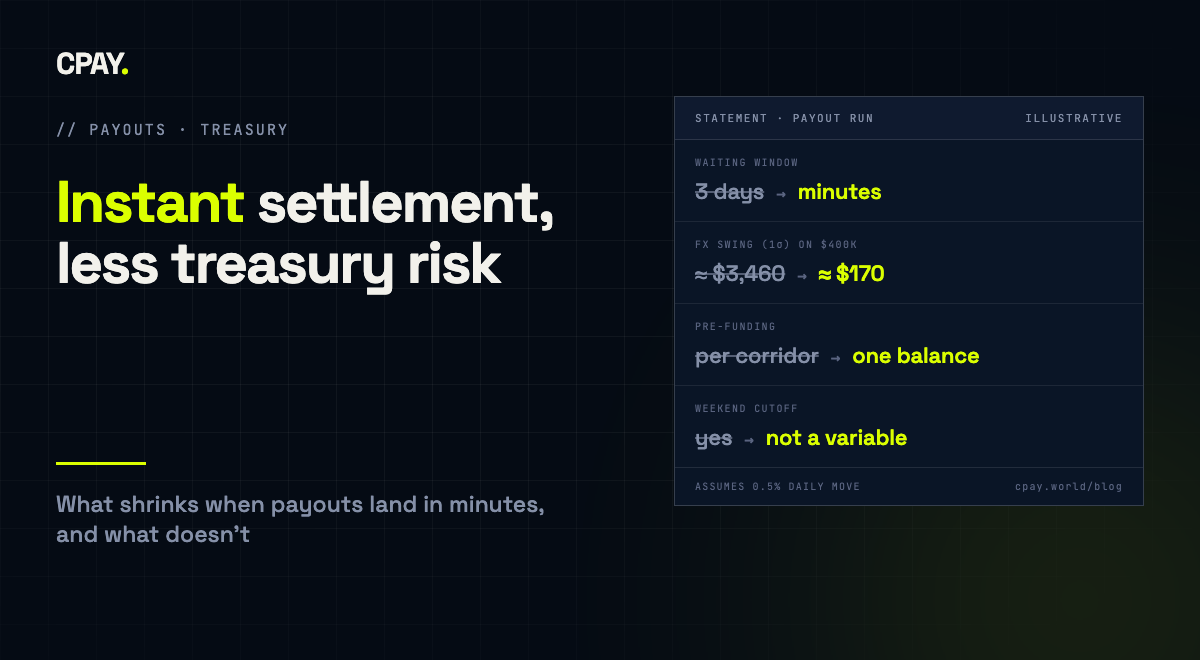
They also reduce treasury exposure when companies receive payments throughout the day.
For businesses that regularly move funds across borders, stablecoins often become the primary settlement currency.
USDT vs USDC
Many businesses ask whether they should support USDT or USDC.
The answer is simple:
Support both whenever possible.
Each serves a slightly different audience.
USDT
USDT remains the most widely used stablecoin across exchanges, trading platforms, forex brokers, and many emerging markets.
Businesses operating globally often receive the majority of their stablecoin payments in USDT.
USDC
USDC continues to grow among regulated financial platforms, fintech companies, SaaS providers, and businesses that prioritize transparency and institutional adoption.
Many North American and European companies prefer settling in USDC.
Supporting both gives customers flexibility without adding significant operational complexity.
Ethereum (ETH)
Ethereum remains one of the largest cryptocurrencies by market capitalization.
Many crypto-native users hold ETH, making it a logical payment option for companies serving blockchain developers, NFT platforms, and DeFi users.
However, ETH is generally less common for routine commercial payments than stablecoins because:
- the asset price changes continuously
- network fees vary depending on demand
- many users prefer keeping ETH invested
For businesses, ETH works well as an additional payment option rather than the primary settlement currency.
Solana (SOL)
Solana has become increasingly popular thanks to its speed and low transaction costs.
Companies serving gaming platforms, digital services, creators, and consumer applications often see growing payment volume in SOL.
Its fast settlement makes it suitable for:
- microtransactions
- digital goods
- online services
- high-frequency payments
As adoption expands, supporting SOL can improve the checkout experience for customers already active in its ecosystem.
Should you accept meme coins?
Many businesses ask about accepting assets like DOGE, PEPE, BONK, or other community-driven tokens.
The answer depends entirely on your audience.
If your customers actively use those assets, offering them as payment options may increase conversion.
For most B2B businesses, however, meme coins represent only a small percentage of transaction volume.
Operationally, they add complexity while providing limited business value.
More supported assets don't always mean better payments
Many payment providers advertise support for hundreds of cryptocurrencies.
That sounds impressive.
Customer behavior tells a different story.

Additional assets can improve customer flexibility, but they rarely replace the core payment currencies businesses process every day.
The objective isn't building the largest asset list.
The objective is supporting the assets your customers actually use.
Think beyond the asset itself
Choosing cryptocurrencies is only one part of a payment strategy.
Businesses also need infrastructure around every transaction.
Questions quickly become operational:
- Which blockchain should customers pay on?
- How are payment confirmations tracked?
- How are incoming transactions reconciled?
- Who receives settlement?
- How are payouts handled?
- How are AML checks performed?
- How does finance export transaction history?
As payment volume grows, operational workflows become more important than the asset list itself.
What should most businesses accept in 2026?
For most companies, a practical payment stack includes:
PriorityAssetBest forEssentialUSDTGlobal payments, payouts, treasuryEssentialUSDCRegulated businesses, SaaS, fintechEssentialBTCHigh-value payments, crypto-native customersRecommendedETHWeb3 ecosystems, developer audiencesRecommendedSOLFast consumer payments and digital services
Businesses serving specific blockchain communities may expand beyond these assets, but this foundation covers the majority of commercial crypto payment demand.
Build your payment stack around customer behavior
The strongest crypto payment strategy starts with understanding how customers prefer to pay.
Stablecoins increasingly power everyday business operations.
Bitcoin continues to play an important role for larger transactions and long-term holders.
Ethereum and Solana support growing blockchain ecosystems.
Rather than selecting a single cryptocurrency, businesses benefit from offering customers several trusted payment options while keeping settlement, reconciliation, compliance, and treasury management centralized through one payment infrastructure.
As crypto payments continue expanding across eCommerce, SaaS, forex, iGaming, marketplaces, and international B2B commerce, flexibility becomes part of the checkout experience.
The businesses that adapt their payment stack to customer behavior will be better positioned as digital payments continue to evolve.