El crecimiento de los negocios Web3 ha aumentado significativamente la demanda de una infraestructura de pagos fiable. A diferencia de los sistemas de pago tradicionales, los pagos con criptomonedas operan en un entorno definido por la volatilidad, la liquidez fragmentada y un rendimiento de red variable. Estas condiciones hacen que la escalabilidad sea un desafío mucho más complejo que simplemente aumentar el rendimiento de las transacciones.
Según Chainalysis, el volumen global de transacciones de criptomonedas sigue creciendo año tras año, y las stablecoins representan una parte significativa de la actividad en cadena. Al mismo tiempo, los datos de Visa destacan el creciente uso real de activos digitales para pagos, particularmente en transacciones transfronterizas.
En este contexto, la escalabilidad debe entenderse como la capacidad de un sistema para mantener la eficiencia, el control de costes y la fiabilidad bajo una carga creciente y condiciones de red cambiantes.
Este caso de estudio explica cómo CPAY aborda este desafío desde una perspectiva de infraestructura.
Gestión de la liquidez como capa central
Uno de los principales desafíos en los pagos con criptomonedas es la fragmentación de la liquidez. Los activos se distribuyen a través de múltiples blockchains, cada una con su propio ecosistema, tarifas y profundidad de mercado.
En términos prácticos, una sola transacción puede implicar varios pasos:
- recibir fondos en un activo y red
- convertir a otro activo
- liquidar en un entorno diferente
Sin una infraestructura adecuada, esto provoca retrasos, mayores costes e intervención manual. Las estimaciones de la industria muestran que el enrutamiento ineficiente y el deslizamiento pueden reducir el valor de la transacción entre un 0,5% y un 2% por conversión, lo que se vuelve significativo a gran escala.
CPAY aborda esto a través de soluciones de liquidez integradas, incluyendo socios como Rhino.fi y Exolix. El sistema determina automáticamente las rutas de conversión óptimas, ejecuta intercambios entre cadenas y enruta los fondos basándose en las condiciones en tiempo real.
Este enfoque reduce la fricción y permite a las empresas operar sin gestionar la liquidez manualmente.
Arquitectura sin custodia y distribución de riesgos
Los proveedores de pagos tradicionales suelen depender de modelos de custodia, donde los fondos de los usuarios se mantienen en cuentas centralizadas. Si bien esto simplifica ciertos procesos, introduce riesgo de contraparte y limitaciones operativas.
En entornos de alto volumen, estos riesgos aumentan proporcionalmente con la cantidad de fondos mantenidos en custodia. Los eventos históricos en la industria de las criptomonedas han demostrado cómo el control centralizado puede llevar a restricciones de fondos, retrasos o pérdidas.
CPAY adopta una arquitectura sin custodia en la que las empresas conservan el control sobre sus activos. Las transacciones se procesan directamente en la cadena, y los saldos no se agregan en un almacenamiento centralizado.
Este modelo ofrece varias ventajas:
- riesgo de contraparte reducido
- liquidación directa sin demoras en los retiros
- mayor transparencia
A medida que el volumen de transacciones crece, el sistema escala sin aumentar la exposición al riesgo centralizado.
Enrutamiento Adaptativo y Eficiencia de la Red
Las redes blockchain exhiben un rendimiento altamente variable. Las tarifas de transacción, los tiempos de confirmación y la fiabilidad pueden cambiar rápidamente según la carga de la red.
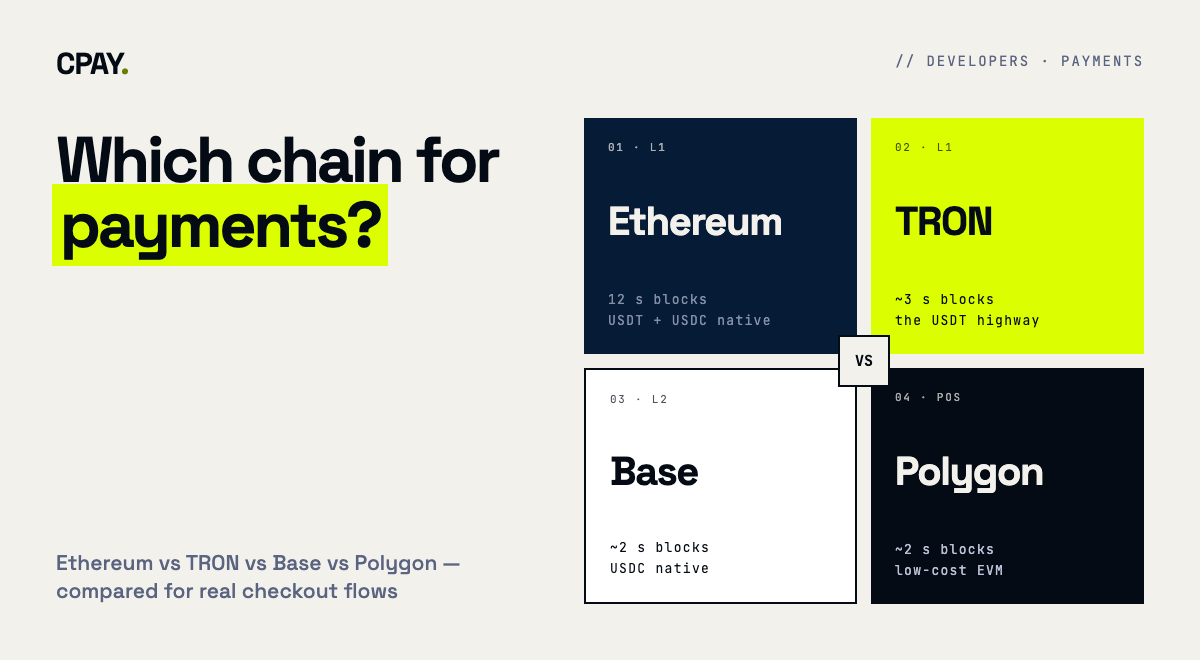
Por ejemplo, los costos de transacción de Ethereum pueden aumentar varias veces durante los períodos de congestión, mientras que las redes alternativas pueden ofrecer una ejecución más rápida y económica bajo las mismas condiciones.
CPAY incorpora mecanismos de enrutamiento adaptativo que analizan las condiciones de la red en tiempo real. El sistema selecciona la ruta más eficiente para cada transacción, equilibrando costo, velocidad y fiabilidad.
Esto asegura que los pagos sigan procesándose de manera eficiente, incluso durante períodos de alta demanda o inestabilidad de la red.
Automatización de Procesos Operativos
A medida que el volumen de transacciones aumenta, la complejidad operativa se convierte en un factor crítico. Los procesos manuales como el seguimiento de pagos, la conciliación y los desembolsos se vuelven rápidamente ineficientes y propensos a errores.
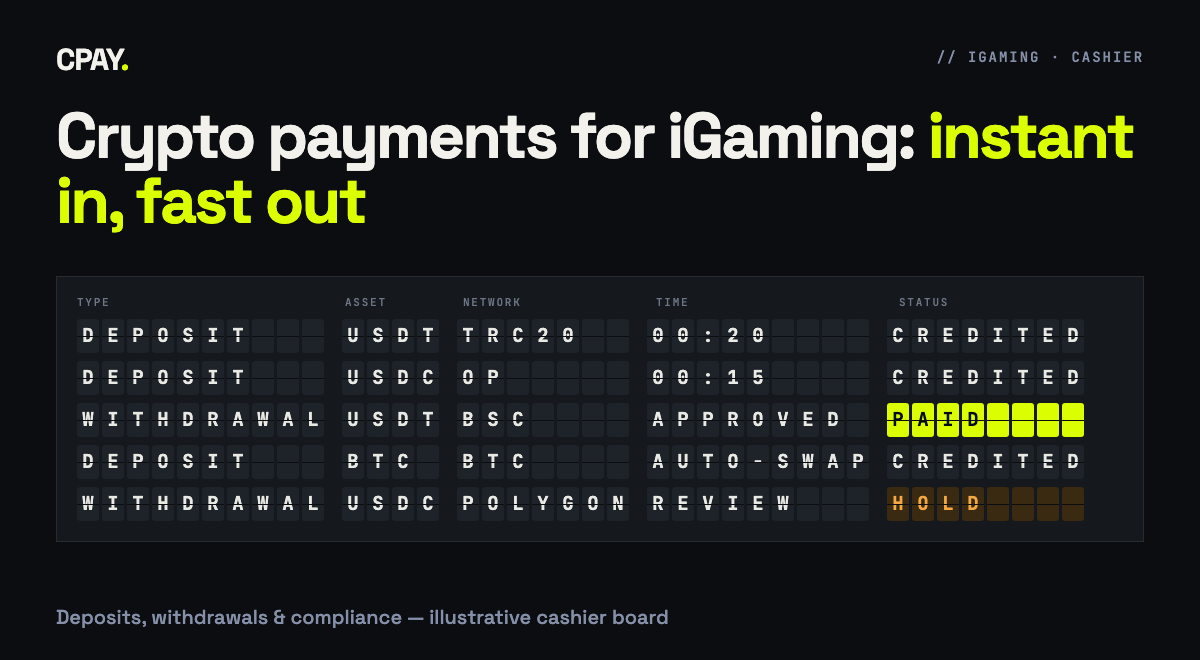
CPAY automatiza flujos de trabajo operativos clave:
- generación de direcciones de depósito únicas
- monitoreo de transacciones entrantes en múltiples redes
- conciliación automática de saldos
- ejecución de pagos por lotes mediante la funcionalidad multisend
En entornos integrados, como las asociaciones con plataformas como LEVER, todo el ciclo de vida del pago —desde la detección del depósito hasta la liquidación final— se gestiona automáticamente.
Esto reduce significativamente los gastos operativos y permite a las empresas escalar sin expandir los recursos de back-office.
Eficiencia de Costos y Economía Unitaria
A escala, incluso las ineficiencias menores tienen un impacto financiero medible. Una pequeña pérdida porcentual en el enrutamiento, las tarifas o el deslizamiento puede traducirse en costos sustanciales a lo largo de miles de transacciones.
Por ejemplo, una ineficiencia promedio de $1 por transacción resulta en:
- $10,000 de pérdida diaria con 10,000 transacciones
- un impacto mensual de aproximadamente $300,000
CPAY se enfoca en minimizar estas ineficiencias mediante un enrutamiento optimizado, pasos de conversión reducidos y estructuras de tarifas competitivas.
Este enfoque mejora la economía unitaria y permite a las empresas mantener la rentabilidad a medida que crecen.
Conclusión
Construir una pasarela de pago de criptomonedas escalable requiere más que mejoras en el rendimiento técnico. Implica diseñar un sistema capaz de manejar la fragmentación de liquidez, adaptarse a las condiciones de la red, minimizar los gastos operativos y mantener la eficiencia de costos.
CPAY aborda la escalabilidad como un problema de infraestructura integral. Al combinar una arquitectura no custodial, procesos automatizados y enrutamiento inteligente, la plataforma permite a las empresas Web3 procesar pagos de manera confiable mientras mantienen el control sobre sus operaciones financieras.
A medida que la adopción de los pagos con criptomonedas sigue creciendo, dicha infraestructura se vuelve esencial para las empresas que buscan operar a escala en un entorno descentralizado.