Crypto Wallet Infrastructure for iGaming and Betting Platforms
Why do betting platforms spend millions on acquisition but lose players at the payout stage?Why does growth in traffic sometimes create operational stress instead of revenue expansion?
Why can a single banking partner decision disrupt an entire region overnight?
In iGaming, the weakest point is often not product, odds, or marketing.
It is payment infrastructure.
Online betting is real-time entertainment. Players deposit instantly, place bets instantly, and expect withdrawals instantly. Any delay between “win” and “payout” directly affects trust. And trust is the real currency of this industry.
Traditional financial rails were not built for this velocity. Crypto wallet infrastructure was.
The Structural Shift: From Payment Method to Financial Backbone
Early crypto integrations in iGaming were simple — add Bitcoin deposits and display a wallet address.
Modern platforms operate differently.
Today, crypto wallet infrastructure functions as an internal financial layer that manages liquidity, user balances, cross-chain routing, and treasury efficiency in real time. It is no longer a payment add-on. It is an embedded financial engine.
This shift changes how operators think about risk, scale, and expansion.
Why Traditional Payment Rails Create Friction
The iGaming industry operates across jurisdictions, currencies, and regulatory frameworks. Traditional payment systems introduce structural challenges:
- Settlement delays across borders
- Chargeback exposure
- Dependency on card networks
- Regional processing limitations
- High fees during peak demand
These frictions compound at scale. During major sporting events, withdrawal queues grow. Liquidity management becomes reactive instead of strategic. Operational teams expand to manage manual reviews.
Crypto reduces the number of intermediaries in the transaction path. Settlement becomes direct and programmable. This shortens the financial feedback loop between player and platform.
The Role of Stablecoins in Betting Economies
Volatility creates accounting complexity. Betting platforms require predictability.
Stablecoins have become the operational standard because they combine blockchain settlement speed with fiat-like price stability. For operators, this means:
- Consistent balance management
- Simplified treasury forecasting
- Lower exposure to asset swings
- Faster reconciliation
For players, it means predictable value during deposits and withdrawals.
In practice, stablecoins transform crypto from a speculative instrument into a transactional layer.
Custody Strategy and Risk Design
One of the most important infrastructure decisions is custody architecture.
In custodial models, the platform manages private keys and user balances internally. This simplifies experience and internal transfers but concentrates responsibility for security and compliance.
In non-custodial or API-based models, players retain direct control over assets while the platform interacts with wallets programmatically. This reduces custody risk and aligns with self-sovereign principles, though it introduces additional UX considerations.
Some advanced operators combine both approaches depending on geography and regulatory exposure.
The decision is strategic, not purely technical. It shapes liability, audit complexity, and long-term scalability.
Multi-Chain Design as an Efficiency Lever
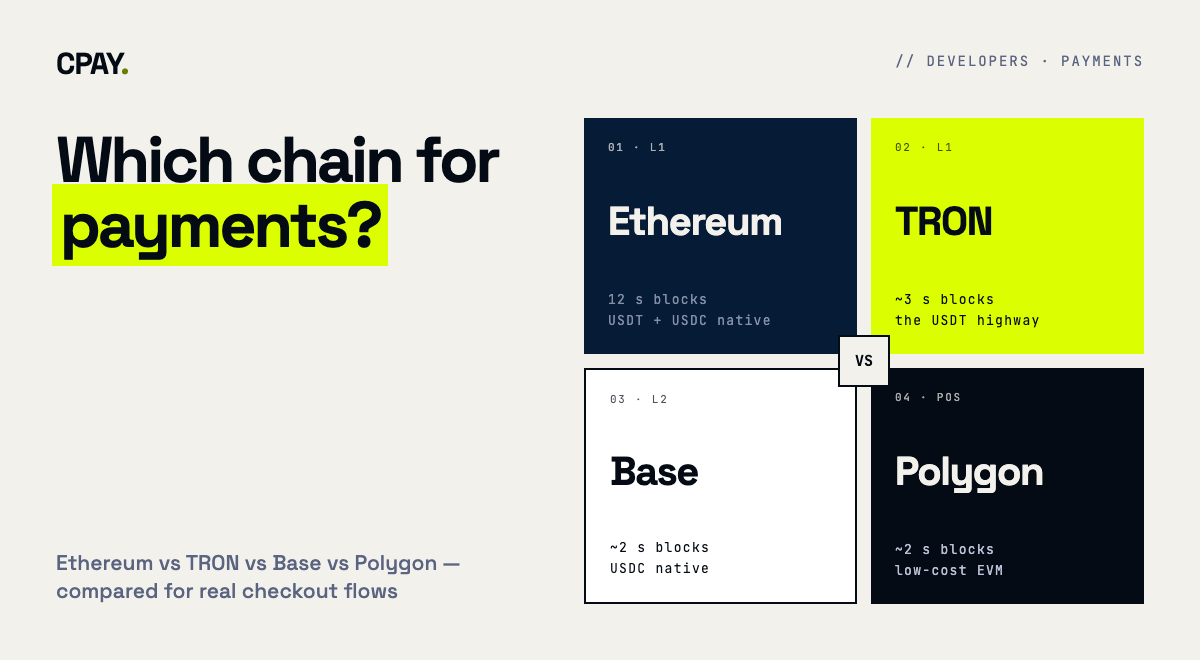
Different blockchain networks offer different advantages. Some prioritize liquidity depth. Others optimize transaction cost or speed.
A well-designed wallet infrastructure allows the operator to support multiple networks and route transactions intelligently. This flexibility reduces fee exposure and prevents congestion during high-traffic periods.
For global betting platforms, multi-chain capability also expands market accessibility without adding traditional banking complexity.
Automation as a Scaling Requirement
In high-volume environments, manual financial workflows do not scale.
Modern wallet infrastructure automates:
- Deposit detection
- Confirmation logic
- Balance updates
- Withdrawal execution
- Liquidity distribution
When infrastructure is automated, growth in user volume does not proportionally increase operational overhead.
This is where architecture becomes margin.
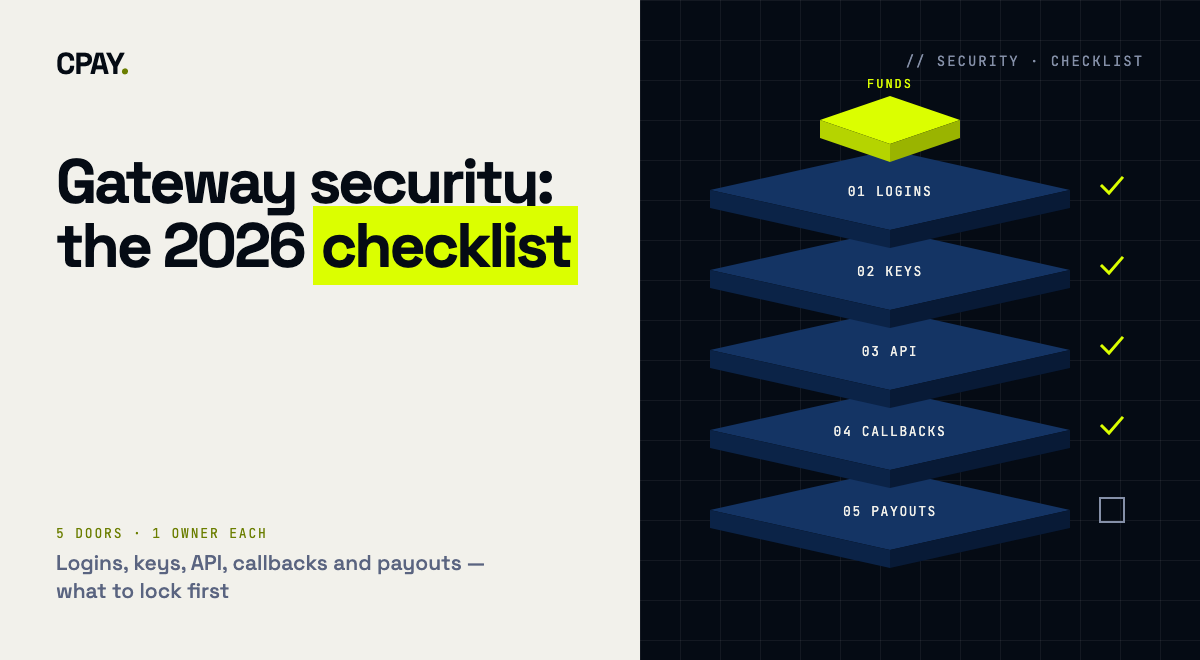
Security as an Architectural Principle
iGaming platforms process constant financial flows. Security cannot be an afterthought.
Institutional-grade systems distribute key control, separate operational liquidity from reserves, and continuously monitor transactional patterns. The goal is not just protection from theft — it is systemic resilience.
Security must be designed for peak volume, not average load.
Strategic Impact Beyond Payments
Crypto wallet infrastructure influences more than settlement speed.
It affects:
- Player retention
- Regional expansion strategy
- Liquidity efficiency
- Operational cost structure
- Regulatory adaptability
- Platform credibility
In competitive markets, faster and more reliable payouts often matter more than promotional bonuses.
Infrastructure quietly shapes brand perception.
The Next Stage: Programmable Betting Economies
As blockchain infrastructure matures, wallet systems become programmable.
Future developments include automated smart-contract payouts, transparent on-chain settlement mechanisms, and tokenized loyalty structures that integrate directly with player wallets.
In this environment, wallet infrastructure is not simply about moving funds. It becomes the programmable core of the betting economy.
How These Infrastructure Problems Are Solved in Practice
Designing crypto wallet architecture is one part of the equation. The second part is implementation — and this is where many operators encounter friction.
Building everything internally requires years of development, security audits, compliance alignment, and continuous maintenance. For fast-moving iGaming platforms, this often delays expansion and increases operational exposure.
This is where infrastructure providers step in.
CPAY addresses the structural challenges discussed above by offering a crypto payment gateway specifically optimized for online casinos and betting platforms.
The focus is not simply on accepting crypto deposits. The infrastructure is designed around the operational realities of iGaming:
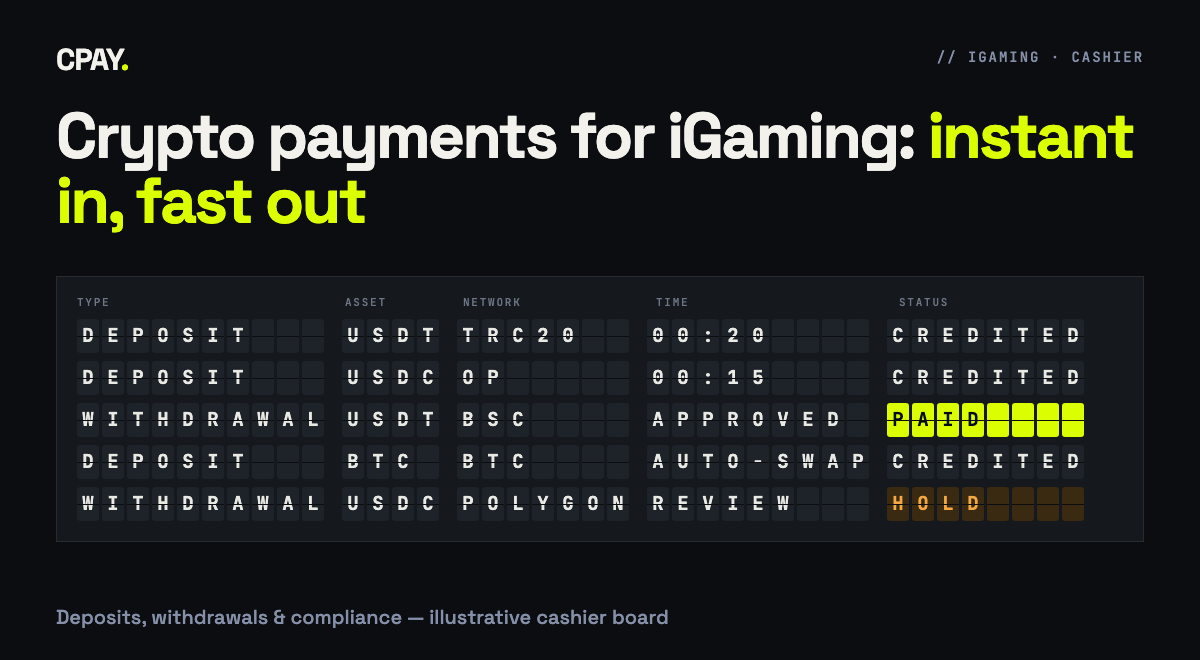
- Instant crypto deposits with automated on-chain monitoring
- Fast withdrawal processing without manual bottlenecks
- Multi-currency and multi-chain support
- Stablecoin integration for predictable treasury management
- Reduced dependency on traditional banking rails
- No chargeback exposure
- Scalable API architecture for seamless integration
For operators, this means faster player onboarding, smoother cash flow management, and the ability to operate across multiple regions without relying entirely on card networks or local PSP fragmentation.
Another critical factor is settlement reliability. In high-volume betting environments, payout delays directly impact trust. By leveraging blockchain-based settlement logic, transaction finality becomes transparent and predictable.
From a treasury perspective, crypto-native routing reduces intermediary layers and allows operators to maintain clearer liquidity visibility across networks.
In practice, infrastructure like this transforms crypto from a marketing feature into a core financial engine embedded inside the platform.
Conclusion
In iGaming, payments are not a background function. They shape trust, liquidity, and long-term stability.
As platforms scale across jurisdictions and transaction volumes grow, financial architecture becomes a strategic layer of the business. Crypto wallet infrastructure allows operators to move beyond fragmented banking dependencies and build a settlement system aligned with the speed of online betting.
The platforms that treat payments as infrastructure — not just integration — position themselves for sustainable global growth.