How to Accept Crypto Payments for eCommerce
In 2015, accepting crypto on an online store sounded experimental.
In 2026, it’s a treasury decision.
Stablecoins are settling billions daily. Global merchants are exploring alternatives to traditional card rails. Cross-border commerce is increasingly shaped by programmable settlement rather than correspondent banking chains.
For eCommerce businesses, the question is no longer “Is crypto real?”
It’s “How do we integrate it properly?”
This article breaks down the process — structurally, strategically, and with attention to compliance and financial impact.
1. Why Crypto Payments Matter for eCommerce Today
Crypto payments are not replacing cards. They are becoming an additional settlement layer.
Public reporting from Visa highlights how stablecoin transaction activity has reached levels that position blockchain as a parallel global settlement rail. At the same time, research by the Cambridge Centre for Alternative Finance shows growing institutional participation in digital asset ecosystems.
For merchants, this translates into three operational advantages:
- 24/7 settlement without banking hours
- Reduced reliance on correspondent banks
- Improved cross-border liquidity visibility
These are infrastructure benefits — not marketing features.
2. Step One: Decide What Assets You Will Accept
Not all crypto assets function the same way in accounting or treasury.
2.1 Volatile Cryptocurrencies (BTC, ETH)
Accepting volatile assets introduces price exposure. Revenue received today may change in value tomorrow. Some businesses accept this risk; most retail merchants prefer predictable margins.
2.2 Stablecoins (USDC, USDT)
Stablecoins are pegged to fiat currencies and reduce volatility risk. Across public blockchain analytics platforms, stablecoins represent the majority of transactional on-chain volume — particularly in cross-border use cases.
For most eCommerce businesses, stablecoins offer:
- Price predictability
- Simplified accounting
- Easier treasury management
Choosing the right asset class defines the entire integration model.
3. Step Two: Choose Your Integration Model
How you integrate crypto determines operational complexity.
3.1 Direct Wallet Acceptance
Customers send funds directly to a merchant-controlled wallet.
This model is technically simple but operationally demanding. The merchant becomes responsible for:
- Address management
- Blockchain confirmation tracking
- Transaction reconciliation
- Private key security
It is suitable for low-volume environments but rarely scales efficiently.
3.2 Crypto Payment Gateway Integration
This is the most common and scalable model.
Infrastructure providers such as Coinbase, BitPay, or solutions like CPAY integrate directly into checkout systems.
In practice, a crypto payment gateway typically:
- Generates unique payment addresses per transaction
- Monitors blockchain confirmations
- Validates settlement status
- Optionally converts crypto into fiat
- Settles funds to the merchant
From the user’s perspective, crypto becomes simply another payment option at checkout.
From the merchant’s perspective, operational complexity is externalized.
3.3 Advanced Infrastructure Integration
Larger platforms may integrate crypto at the treasury level, not just checkout.
This can include:
- Automated on-ramp and off-ramp mechanisms
- Stablecoin liquidity routing
- Multi-chain support
- Compliance screening engines
At this stage, crypto is part of financial architecture — not a feature toggle.
4. Step Three: Understand Regulatory and Compliance Exposure
Crypto is borderless. Regulation remains jurisdictional.
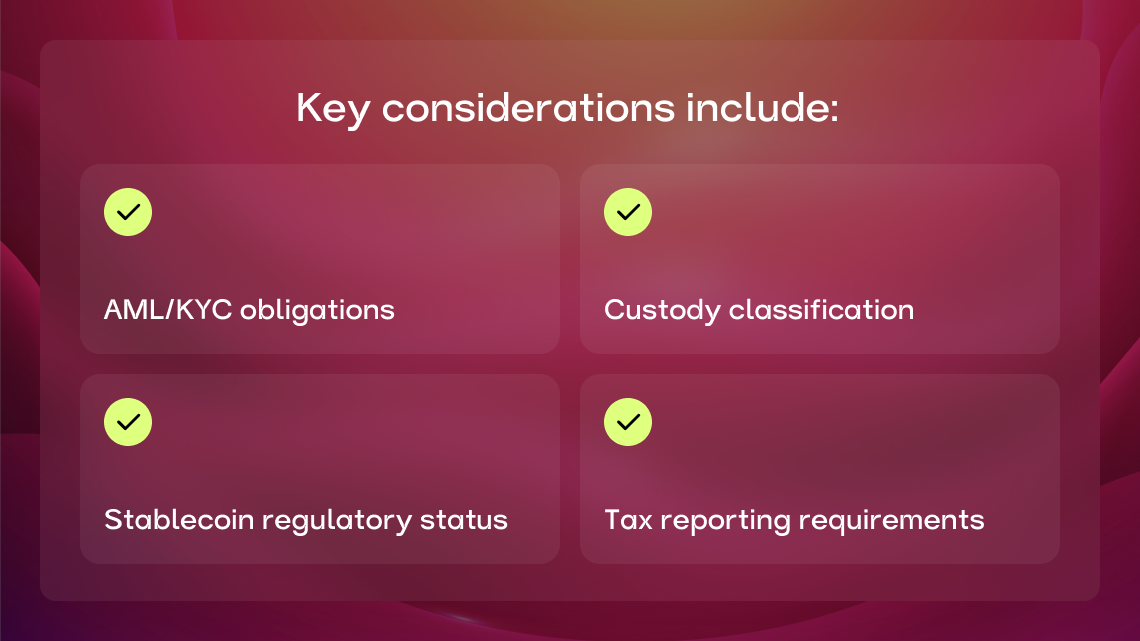
In the European Union, MiCA (Markets in Crypto-Assets Regulation) introduces clearer rules for crypto asset service providers. In other jurisdictions, regulatory treatment varies depending on whether a merchant takes custody or works through licensed intermediaries.
Most merchants reduce direct exposure by partnering with compliant infrastructure providers.
5. Step Four: Evaluate the Economics
Transaction fees are only part of the equation.
Traditional card processing may range between 1.5%–3.5%, depending on risk category and geography. Additional costs can include chargebacks and FX spreads.
Blockchain transaction costs vary by network congestion and design. On scalable networks, stablecoin transfers often settle within minutes at relatively low cost.
However, the economic impact extends beyond fees:
- Faster liquidity access improves cash flow
- Reduced intermediaries lower cross-border friction
- Final settlement eliminates chargeback disputes
Cost analysis must include operational and treasury dimensions.
6. Step Five: Align With Treasury Strategy
Accepting crypto is not purely a checkout decision — it is a financial strategy decision.
Merchants must determine:
- Will funds be converted immediately into fiat?
- Will stablecoins be held as working capital?
- Will digital assets be used for supplier payments?
Stablecoins allow global value transfer without introducing volatility. This flexibility can improve international liquidity management.
Treasury alignment should precede integration.
7. Security and Operational Readiness
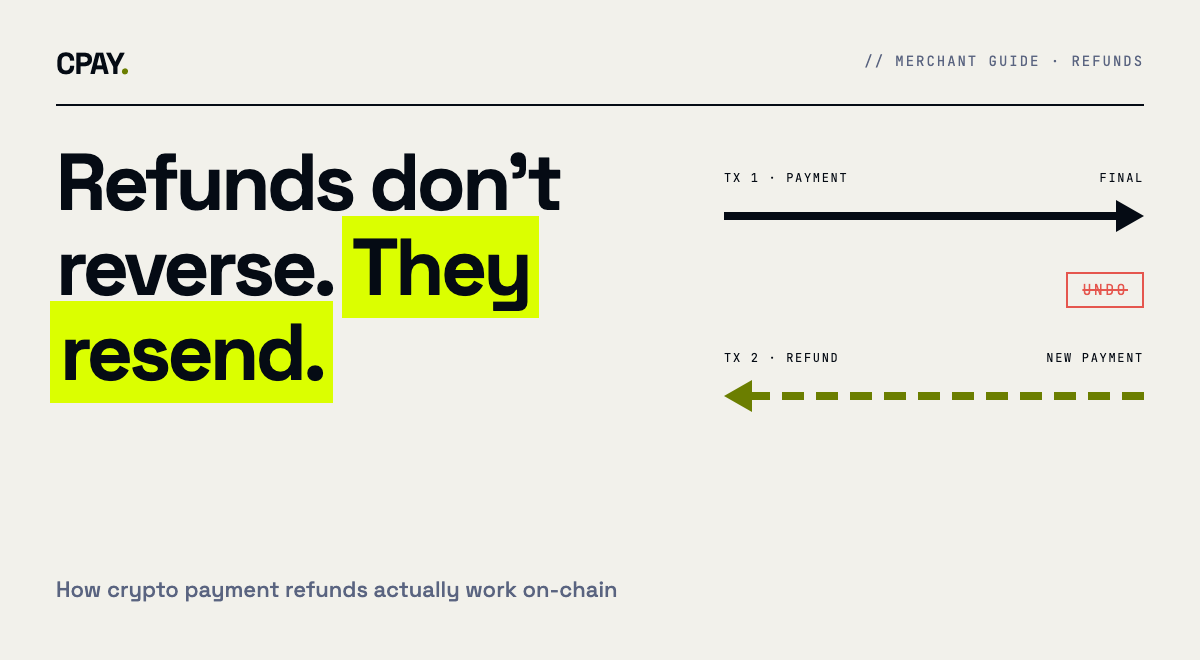
Blockchain transactions are irreversible. That makes operational design critical.
Merchants must ensure:
- Secure key management (if self-custody is used)
- API and checkout security standards
- Clear refund and dispute policies
- Infrastructure audit transparency
Crypto payments require the same governance standards as any financial system upgrade.
When Does Crypto Checkout Make Strategic Sense?
Crypto payments are particularly effective for:
- Cross-border digital businesses
- Subscription services with global customers
- Markets with high card decline rates
- Web3-native audiences
For purely domestic retail with strong card performance, the incremental value may be limited.
Conclusion
Accepting crypto payments for eCommerce in 2026 is no longer experimental.
It is an infrastructure choice.
Merchants that approach integration strategically — defining asset policy, selecting the right gateway architecture, aligning treasury strategy, and managing compliance — can add programmable settlement as an additional financial rail.
The competitive advantage is not in offering crypto for optics.
It is in understanding how digital asset infrastructure enhances financial flexibility and operational resilience.