.png)
Reducing Payment Processing Costs: How Low-Fee Crypto Payment Gateways Improve Business Margins
Payment costs rarely look critical at the beginning. A few percentage points per transaction feel manageable. As volume grows, those same percentages start shaping the entire financial model.
For businesses processing thousands of payments, fees move from being an expense to becoming a limiting factor.
Where costs accumulate
Traditional payment systems introduce multiple layers between the customer and the final settlement. Each layer adds its own cost.
— Interchange and processor fees
— Currency conversion spreads
— Payment routing inefficiencies
— Settlement delays tied to banking systems
These costs don’t always appear clearly. Part of the margin disappears into spreads, part into timing, part into infrastructure inefficiencies.
At scale, this creates a gap between expected and actual revenue.
Why cost structure matters more than fee size
Many providers compete on headline fees, but the real impact comes from how the system is built.
A payment flow with multiple intermediaries creates variability. Costs change depending on geography, currency, and routing decisions. This makes financial planning less precise and margins harder to control.
A simpler structure changes the equation.
Low-fee crypto payment gateways reduce the number of intermediaries involved in each transaction. The result is a more direct flow of value, with fewer points where costs can accumulate.
How crypto payment gateways reduce processing costs
Crypto-based infrastructure operates differently from traditional systems. Transactions are processed on-chain or through optimized internal routing, without relying on multiple banking layers.
This leads to:
— Consistent transaction fees
— Fewer hidden costs
— Faster settlement cycles
— Reduced dependency on third-party processors
Instead of variable pricing, businesses work with a predictable cost per transaction. That consistency becomes important when scaling operations.
Impact on margins at scale
For high-volume platforms, even small differences in fees create measurable outcomes.
A 1–2% reduction in processing costs can significantly increase retained revenue over time. This is especially relevant for:
— eCommerce platforms
— SaaS products
— iGaming businesses
— Digital services with global user bases
Lower fees mean each transaction contributes more to the bottom line. As volume increases, the effect compounds.
Faster settlement, better cash flow
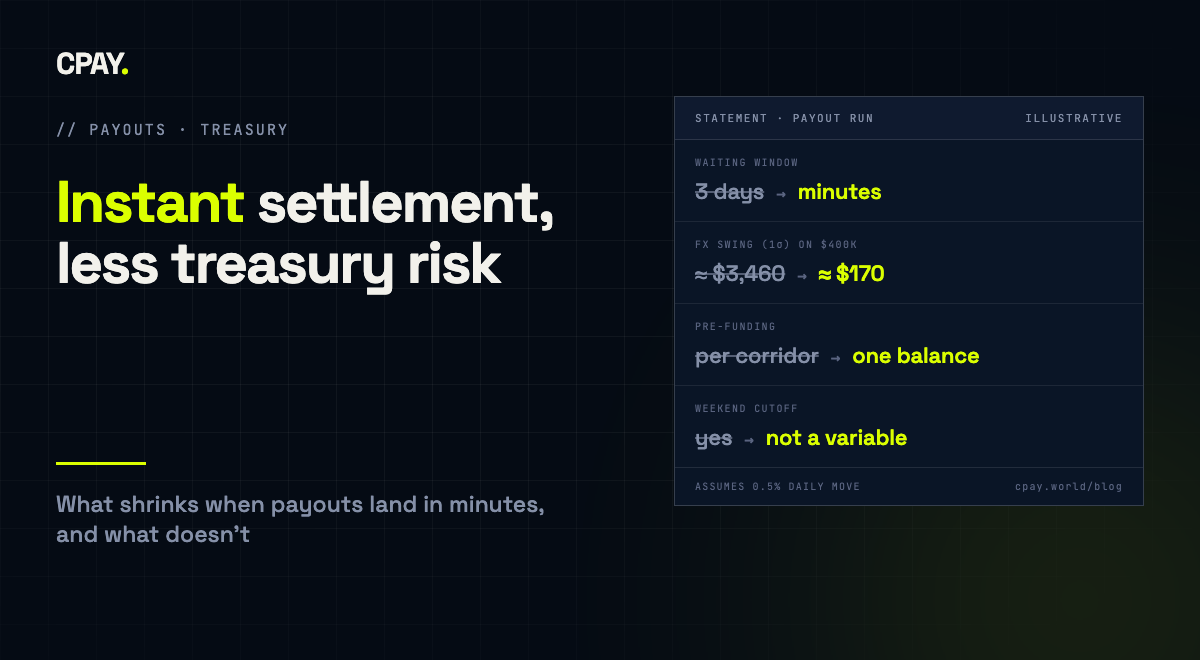
Traditional payment systems often require days to settle funds. This creates delays in accessing revenue and limits how efficiently capital can be used.
Crypto payments reduce settlement time to minutes.
Faster access to funds allows businesses to:
— Reinvest capital more quickly
— Improve liquidity management
— Reduce reliance on external financing
— Operate with tighter financial cycles
Cash flow becomes more dynamic, which directly supports growth.
Stablecoins and predictable economics
Volatility used to be a barrier for crypto payments. Stablecoins changed that.
Assets like USDT and USDC provide price stability while maintaining the efficiency of blockchain-based transactions.
This allows businesses to:
— Keep pricing consistent across markets
— Avoid FX-related losses
— Use a single settlement asset globally
— Maintain predictable margins
Stablecoins combine the operational advantages of crypto with the financial stability businesses need.
Operational efficiency beyond fees
Payment infrastructure also defines how complex operations become.
Fragmented systems require multiple integrations, manual reconciliation, and ongoing monitoring. This increases operational costs and creates additional risk.
A unified crypto payment gateway simplifies this:
— Payments, wallets, and reporting in one environment
— Real-time transaction tracking
— Automated settlement and payout flows
— Reduced operational overhead
Fewer moving parts lead to more reliable processes.
How CPAY supports cost efficiency
Businesses looking to reduce processing costs often turn to CPAY for a more predictable model.
The platform is built around a flat transaction fee, removing the complexity of layered pricing and hidden spreads.
This structure provides:
— Clear cost per transaction
— Stable economics at any volume
— Optimized routing for faster execution
— Support for stablecoin-based payments
With a consistent fee model, businesses gain control over their margins and can scale without constantly adjusting to changing costs.
Closing perspective
Payment processing costs influence every transaction, every margin, and every growth decision.
When the cost structure is complex, scaling introduces more uncertainty. When costs are predictable, scaling becomes a controlled process.
Low-fee crypto payment gateways give businesses a way to reduce friction, improve financial clarity, and keep more value from every transaction.