Crypto payments are undergoing a foundational transition. The first generation of providers relied on custodial models, mirroring the logic of traditional fintech: user funds were transferred to an intermediary, pooled, processed, and released according to internal schedules.
The second generation—non-custodial infrastructure—removes this intermediary layer entirely, enabling direct on-chain settlement and eliminating custody risk.
This article examines the fundamental differences between the two approaches and explains why non-custodial systems are becoming the dominant model for global crypto payments.
1. The Custodial Model: a Web2 structure applied to Web3
Custodial gateways were built on the idea that payment providers should hold and manage user funds. Technically, this means:
- incoming payments land on the provider’s wallets;
- funds are stored, consolidated, and reconciled internally;
- payout schedules and withdrawal routes are controlled by the provider;
transparency is limited to internal reporting.
.png)
Key structural weaknesses
Regulatory exposure
Holding user funds places the provider into the category of a custodial financial institution, triggering licensing, capital requirements, and AML burdens similar to exchanges.
Settlement latency
Because funds pass through internal systems, operations often rely on manual review, batching, and liquidity management, leading to delays inconsistent with blockchain speeds.
Operational risk concentration
Funds accumulate on a single controlled balance. Any incident—technical, financial, legal, or security-related—directly impacts all clients.
The failures of several custodial crypto services in 2022–2023 demonstrated the systemic fragility of this model.
Operational risk concentration
Since transactions occur off-chain within the provider’s system, businesses depend on internal reporting rather than verifiable on-chain data.
2. The Non-Custodial Model: infrastructure aligned with blockchain principles
Non-custodial systems eliminate the storage and handling of user funds. Instead, they provide the technological layer enabling:
- direct wallet-to-wallet settlement;
- real-time on-chain payment confirmation;
- automated payment routing without internal balances;
- merchant-controlled wallets and keys.
Structural advantages
No custody risk
Businesses retain full control of their assets. Funds never enter provider-controlled wallets.
On-chain traceability
All transactions are transparent, auditable, and verifiable without reliance on provider-side reporting.
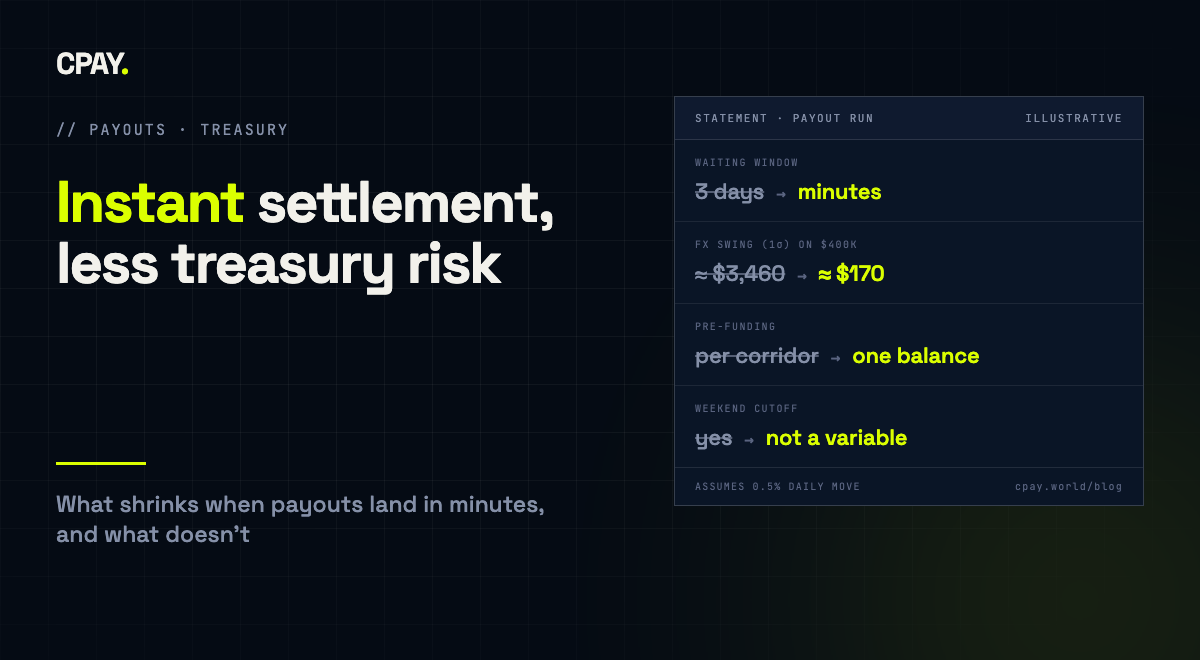
Instant availability of funds
Since the provider does not batch or hold transfers, settlement occurs as soon as the underlying blockchain confirms the transaction.
Simplified compliance
Non-custodial providers are not categorized as custodians, reducing regulatory friction for both sides.
Global scalability
Expanding to new markets becomes a matter of connecting infrastructure to additional blockchains, not building region-specific custody rails.
This model reflects the core ethos of Web3: decentralization, transparency, and removal of unnecessary intermediaries.
3. Market Adoption: why businesses are transitioning
Across e-commerce, fintech, gaming, and Web3-native platforms, the shift toward non-custodial systems is accelerating.
The reasons are practical:
– lower operational risk,
– predictable liquidity control,
– better regulatory clarity,
– reduced reliance on third-party consolidation,
– faster settlement and reconciliation.
Industry reports (Chainalysis, Messari, on-chain analytics) show rising transaction volumes involving direct P2B wallet payments, confirming a structural movement away from custodial intermediaries.
4. CPAY’s Architecture: designed non-custodial from inception
CPAY operates exclusively as non-custodial infrastructure.
The system is engineered so that:
- CPAY never touches merchant or user funds;
- all payments settle directly on-chain;
- every transaction is independently verifiable;
- funds are immediately available to the business;
- integration requires weeks rather than the extensive onboarding needed for custodial setups.
CPAY’s role is strictly technological: APIs, invoice logic, automation, secure monitoring, and network connectivity. Asset control remains entirely with the merchant.
Conclusion
Custodial crypto gateways replicate the centralization and operational risk of traditional finance.
Non-custodial infrastructure offers a structurally superior alternative: direct settlement, verifiable transparency, reduced regulatory exposure, and global scalability.
As the crypto economy matures, the industry is converging toward architectures that remove intermediaries rather than recreate them.
Non-custodial payment infrastructure is becoming the standard—and CPAY is built precisely on that foundation.